







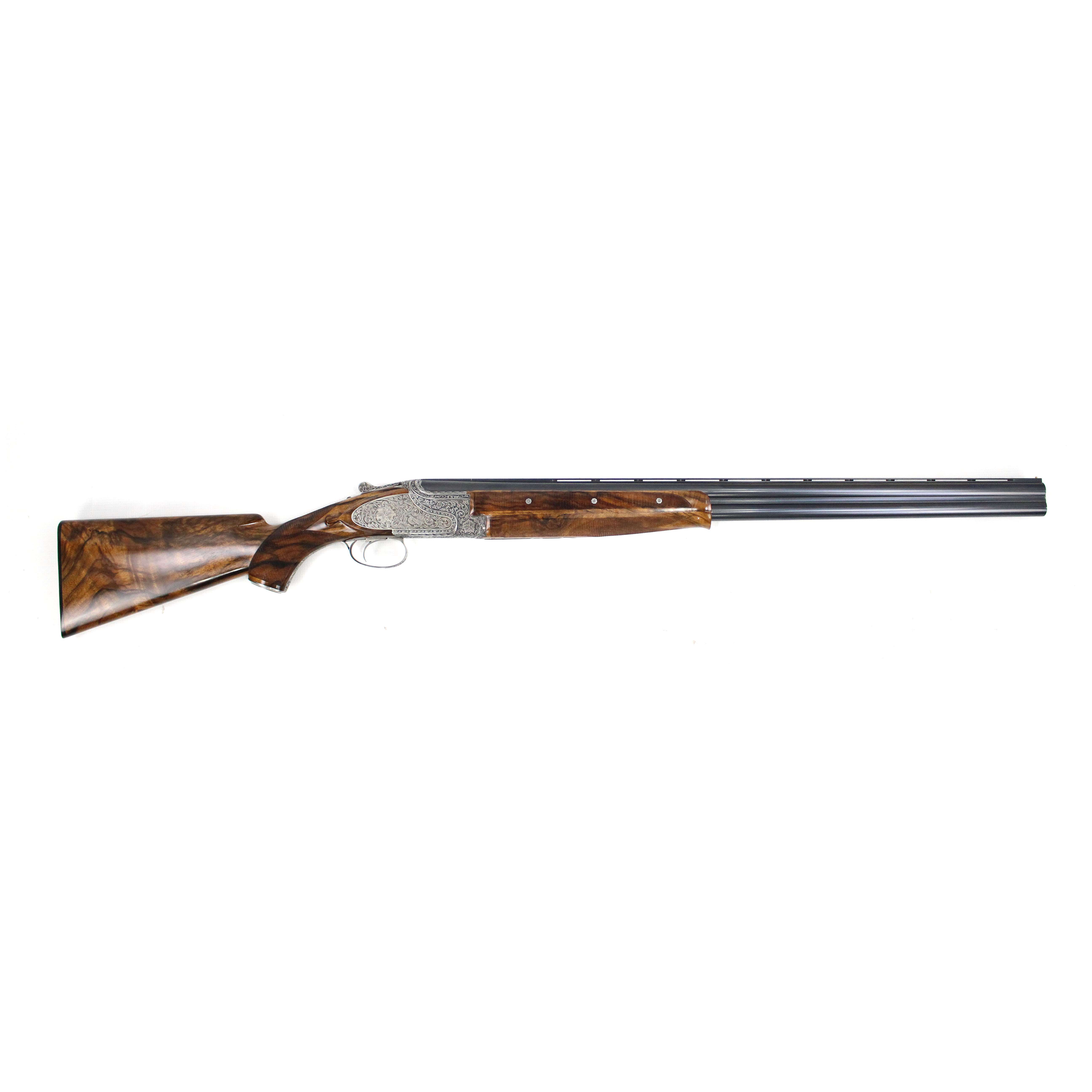
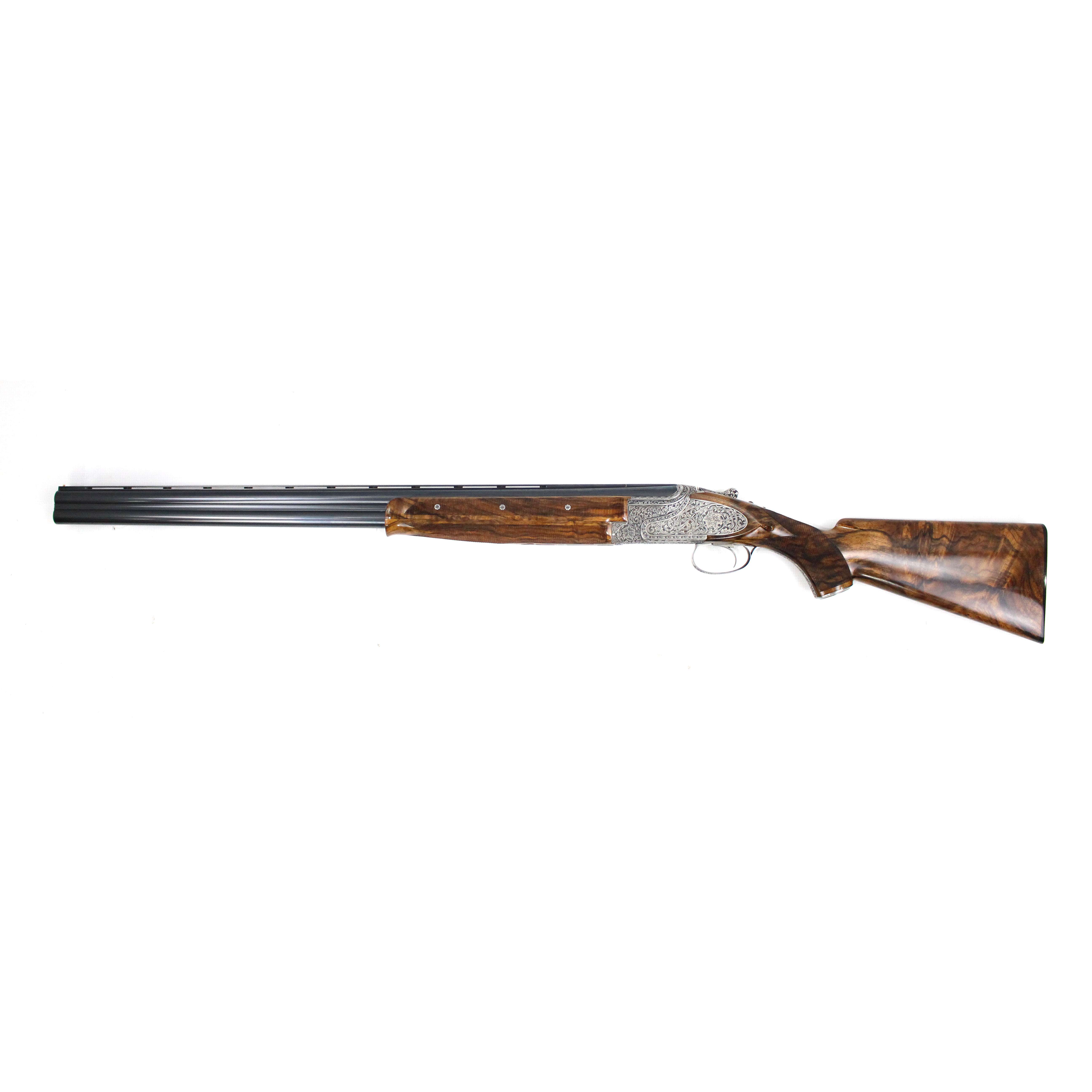
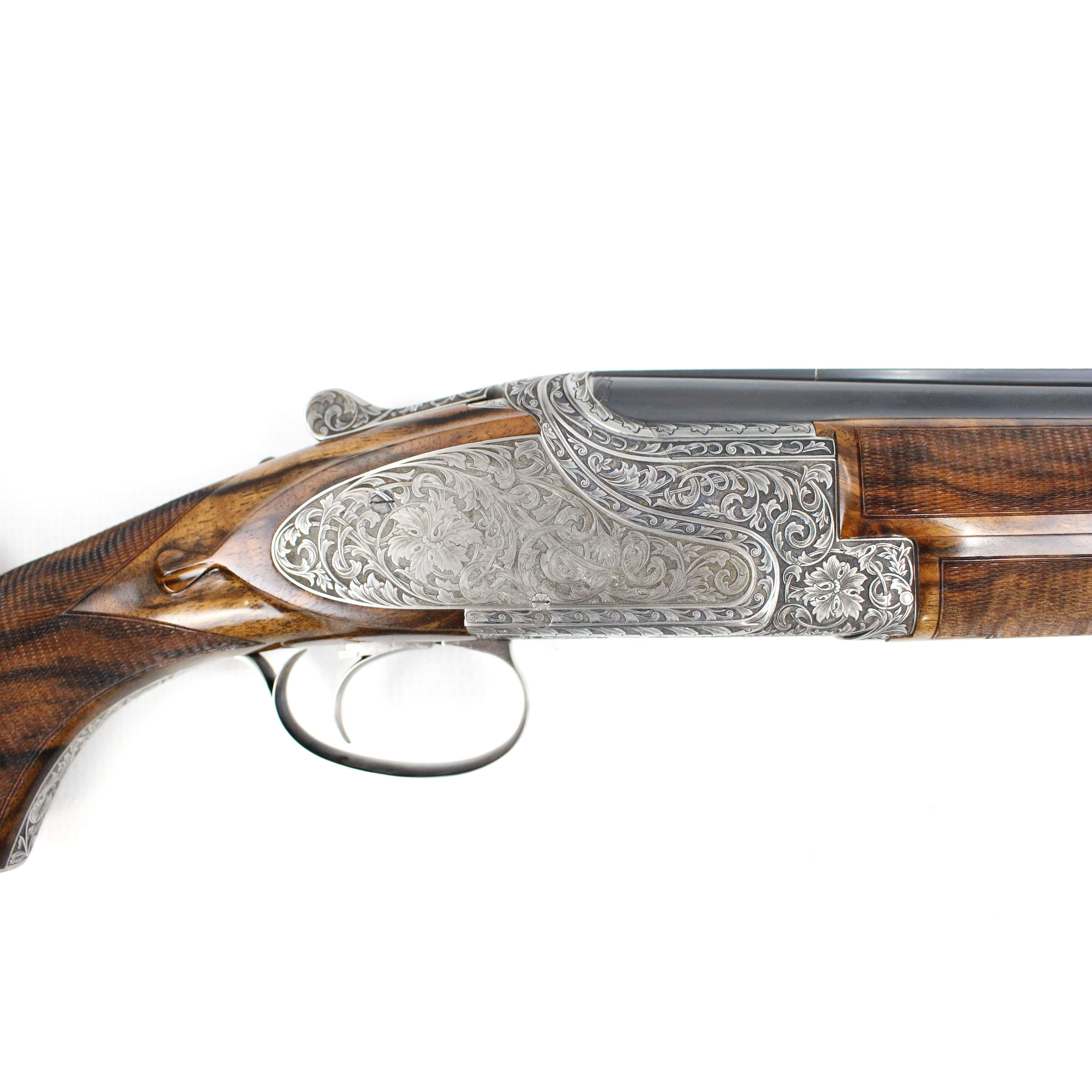
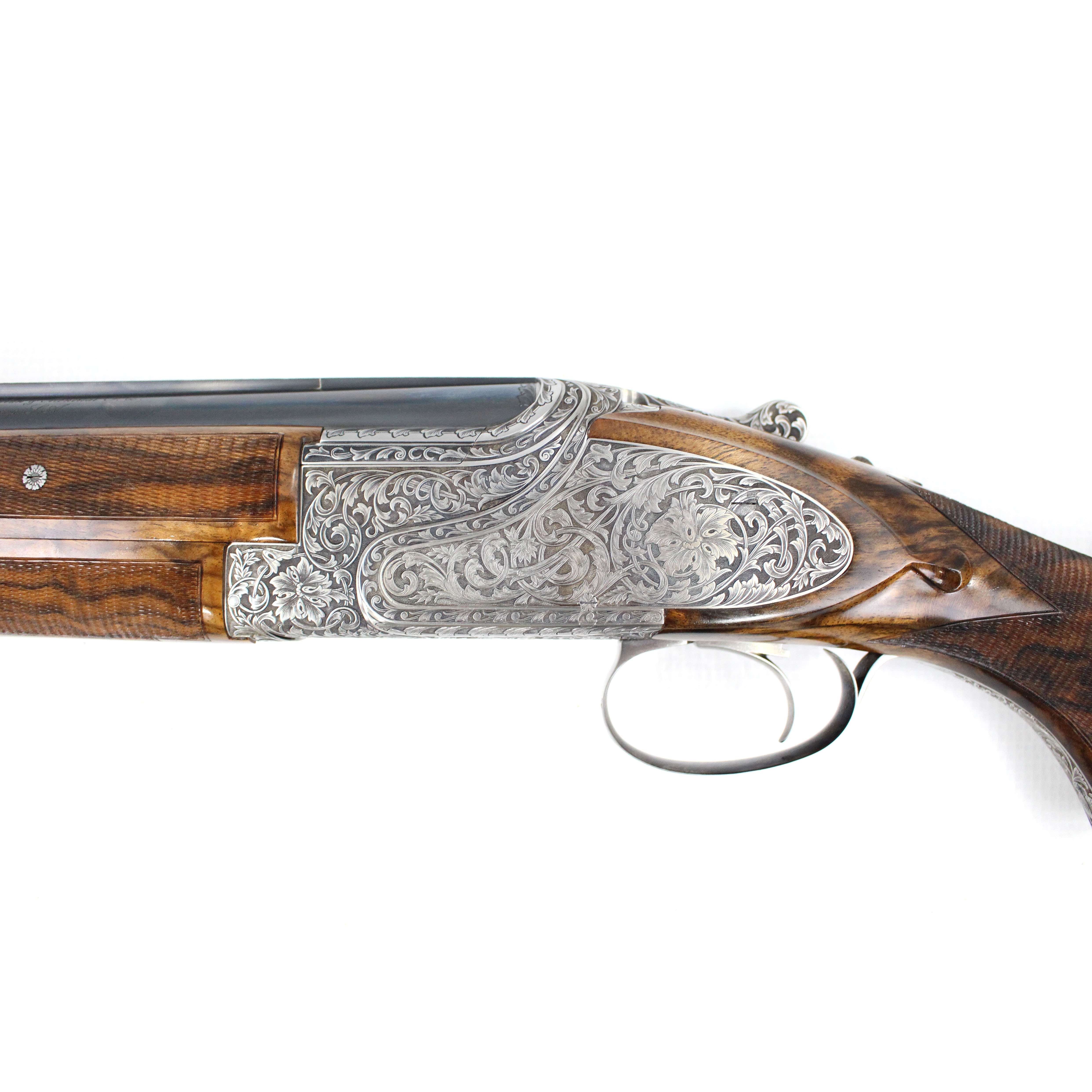
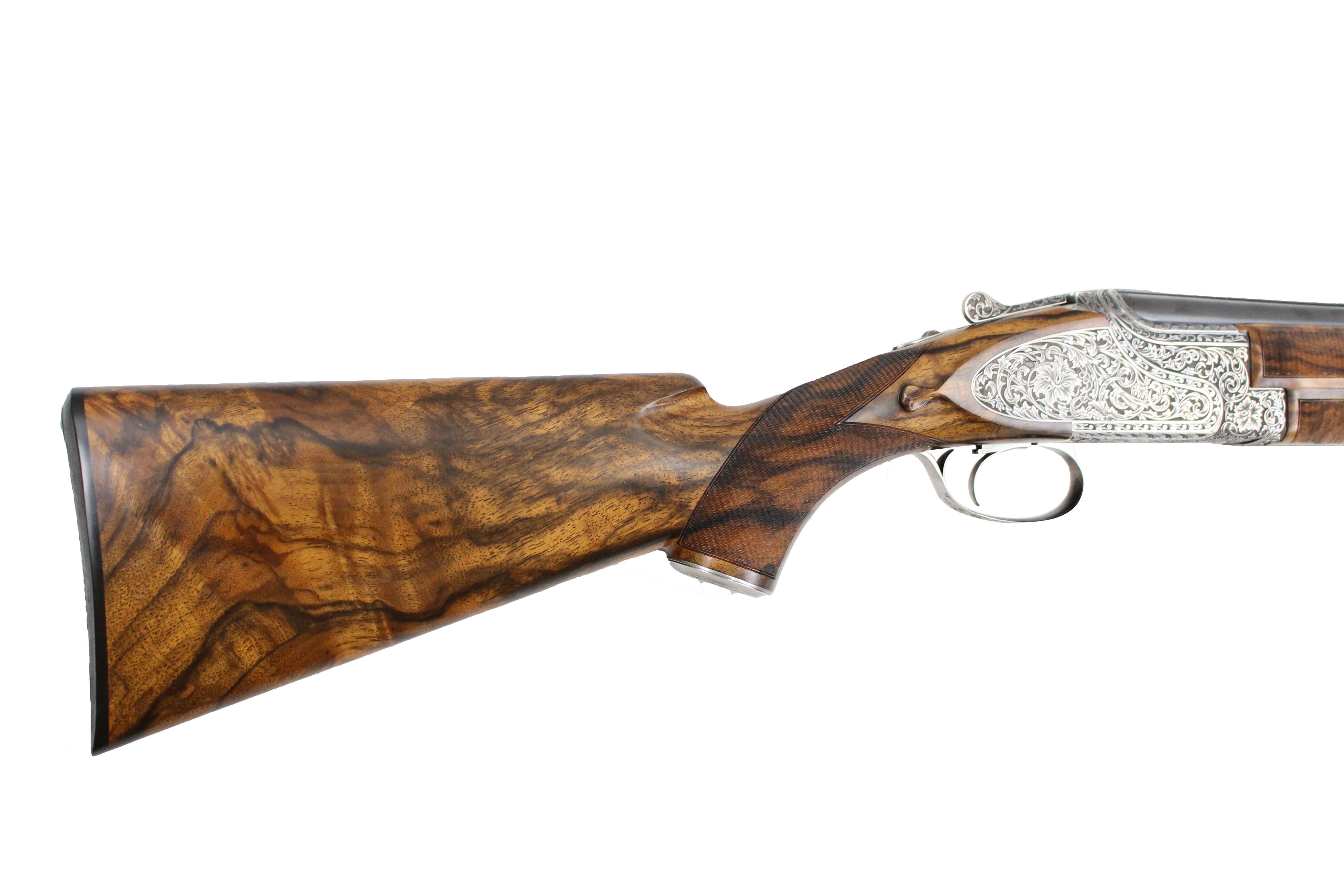
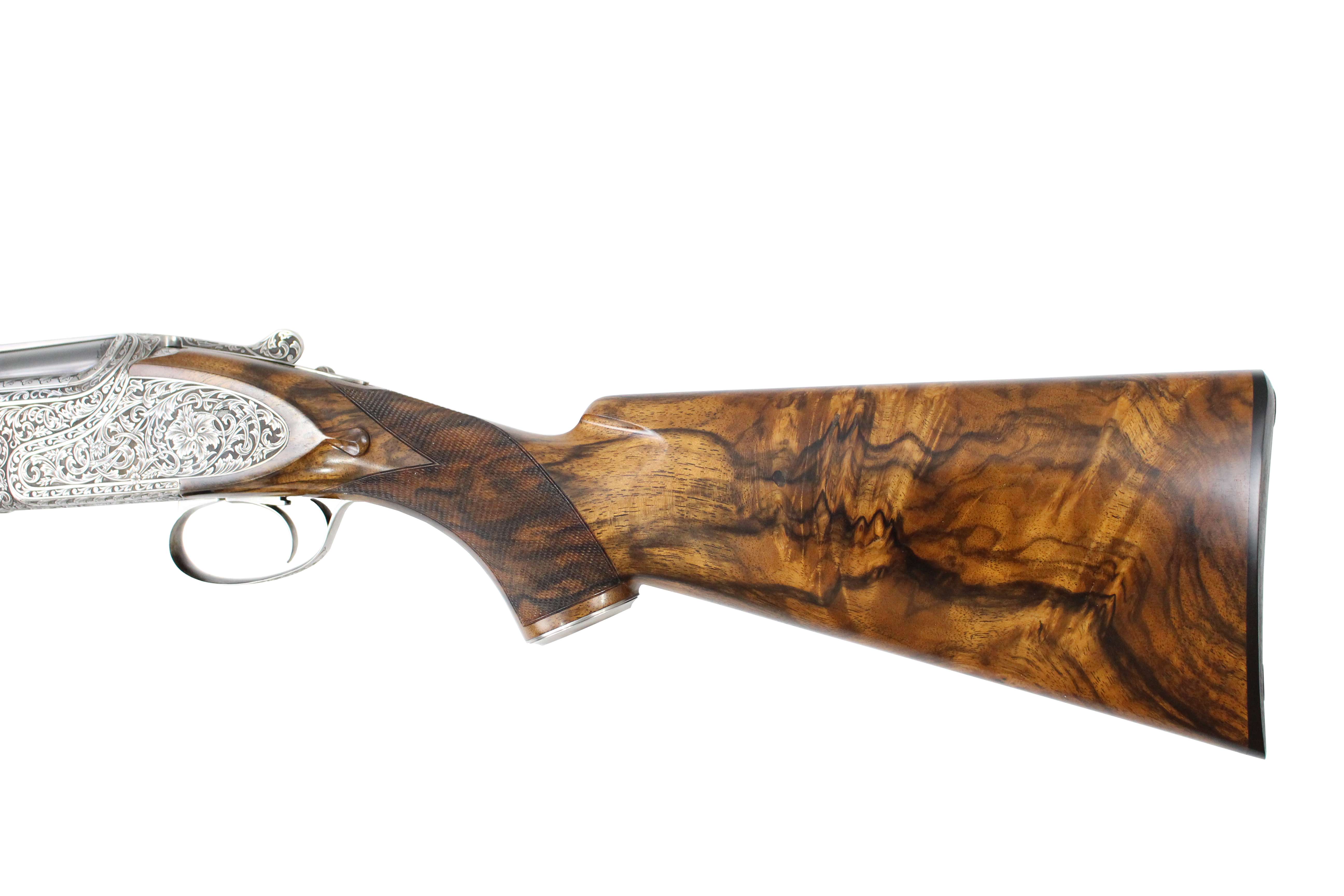
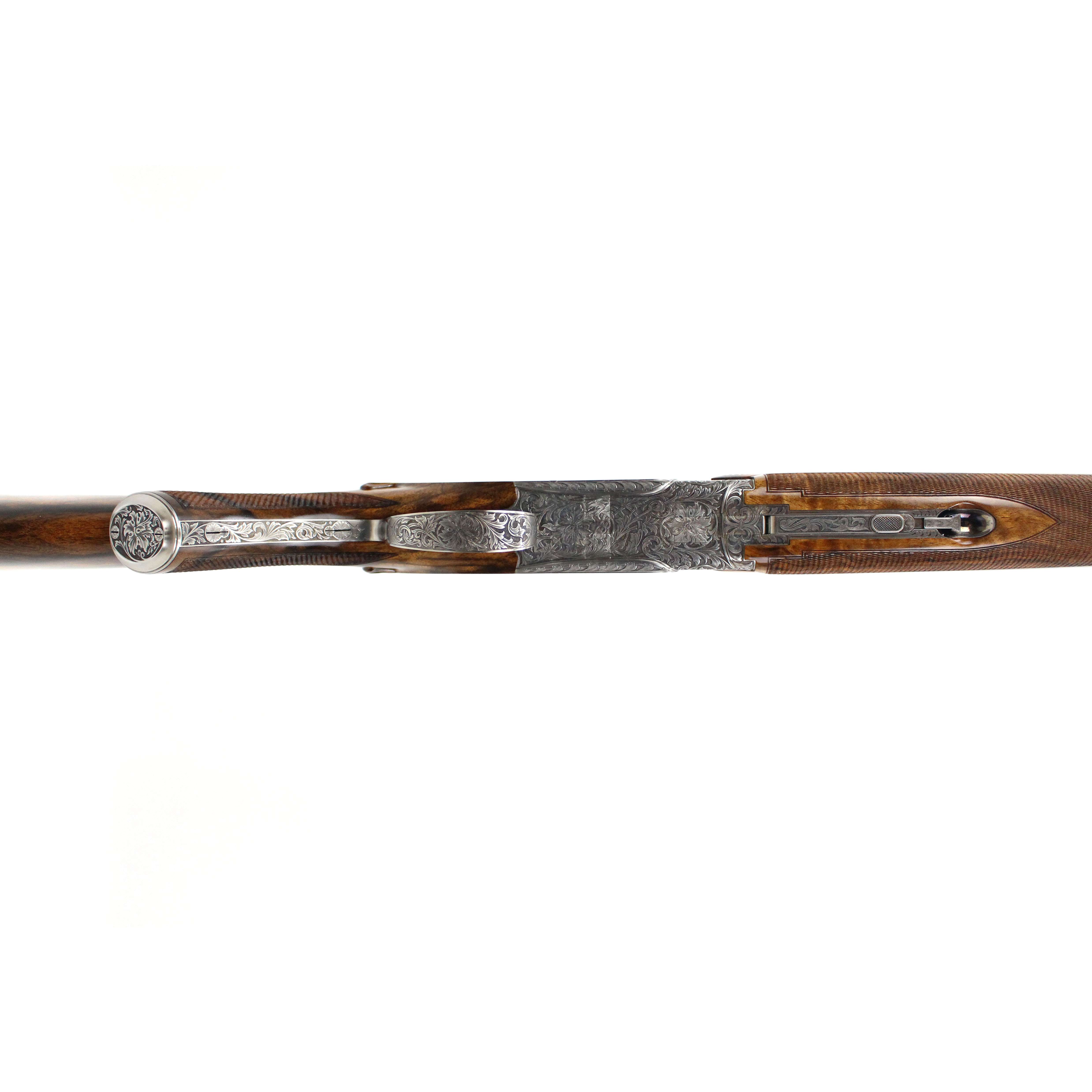
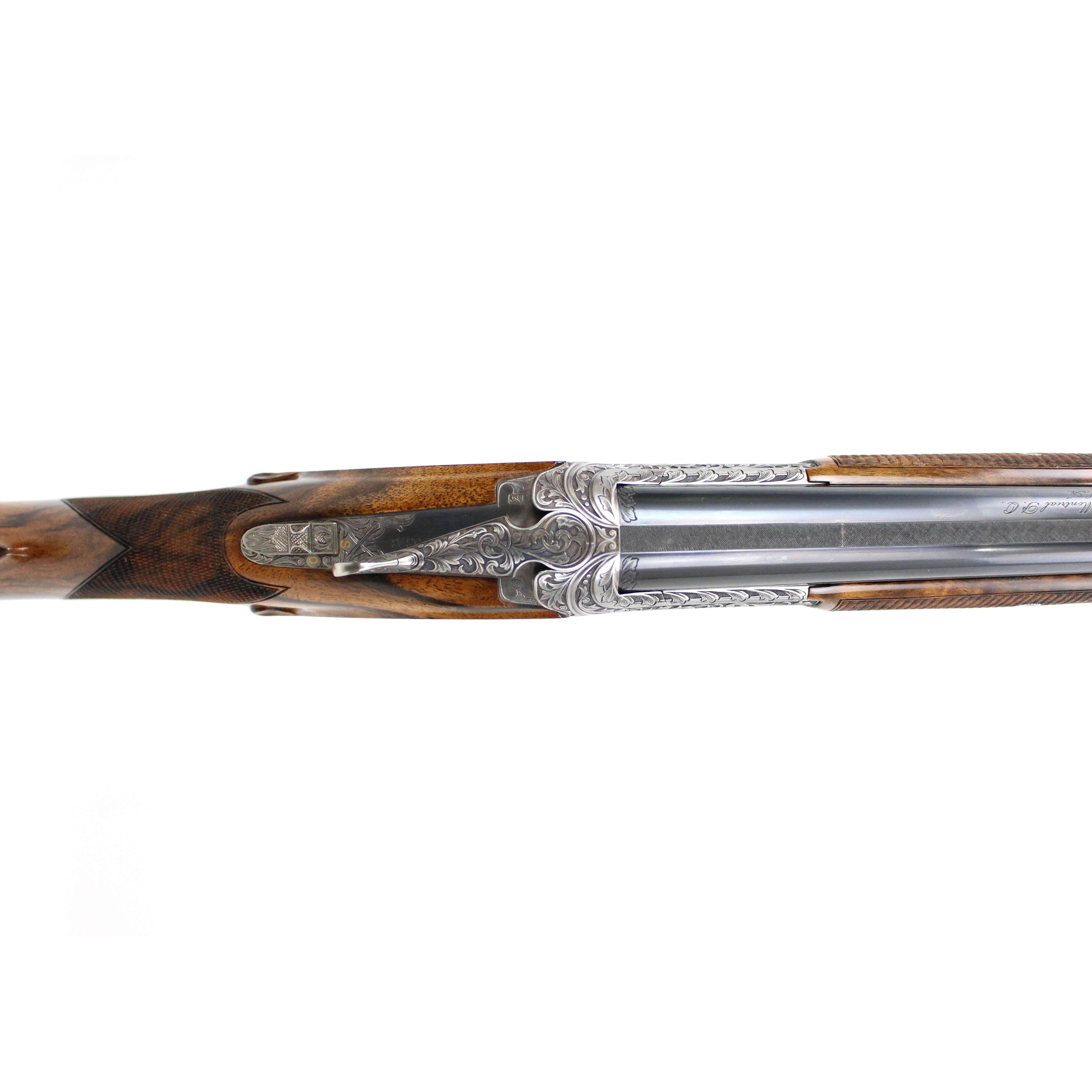
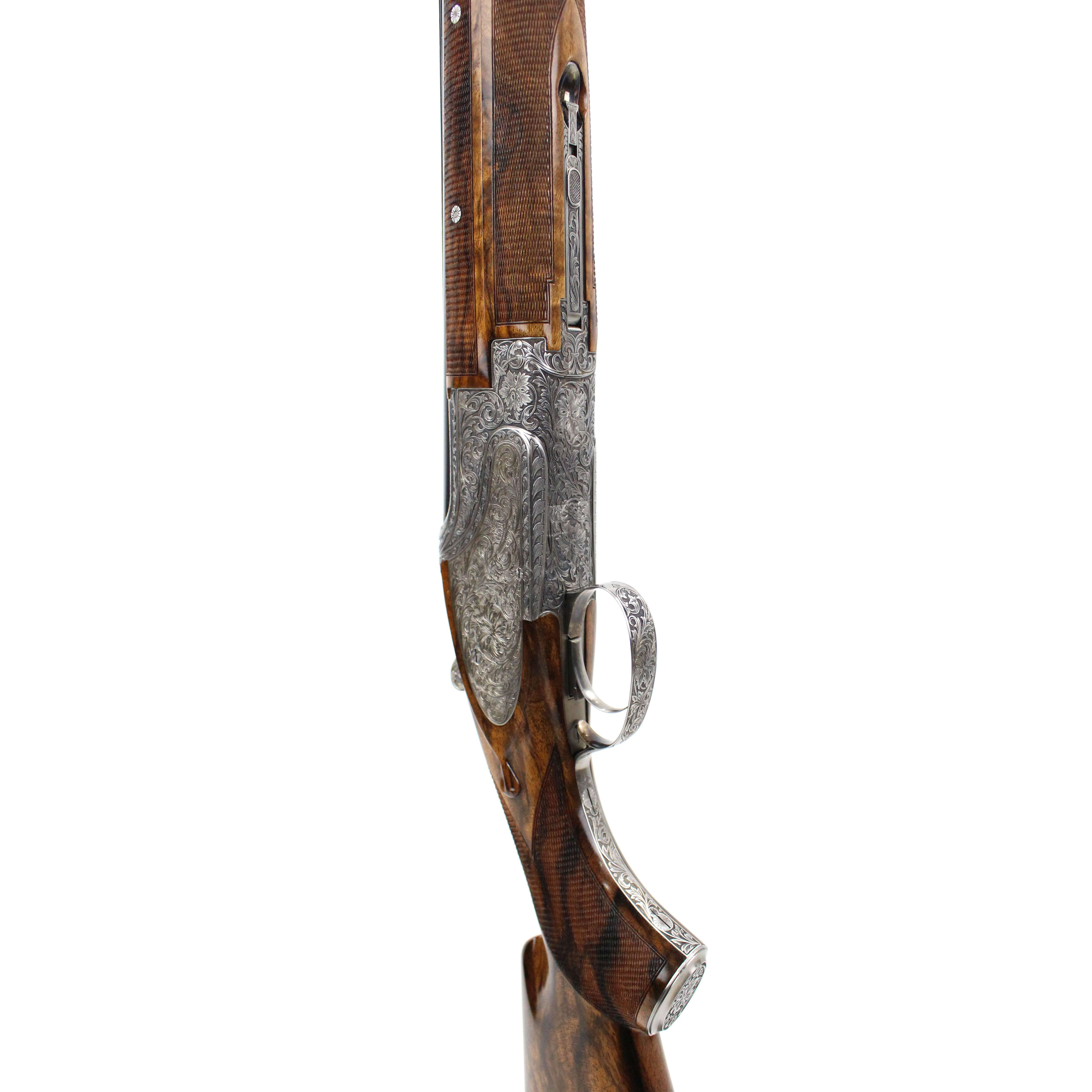
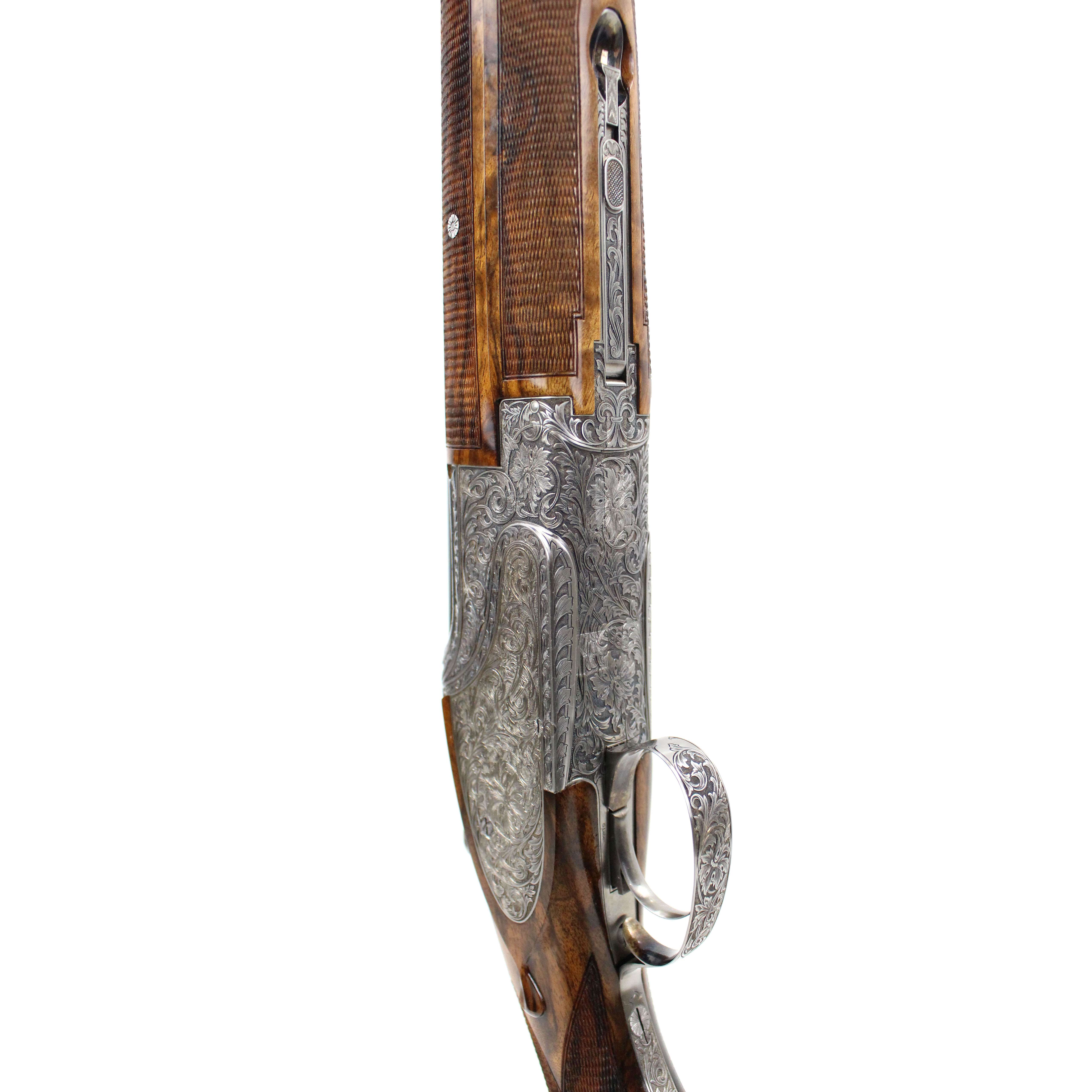
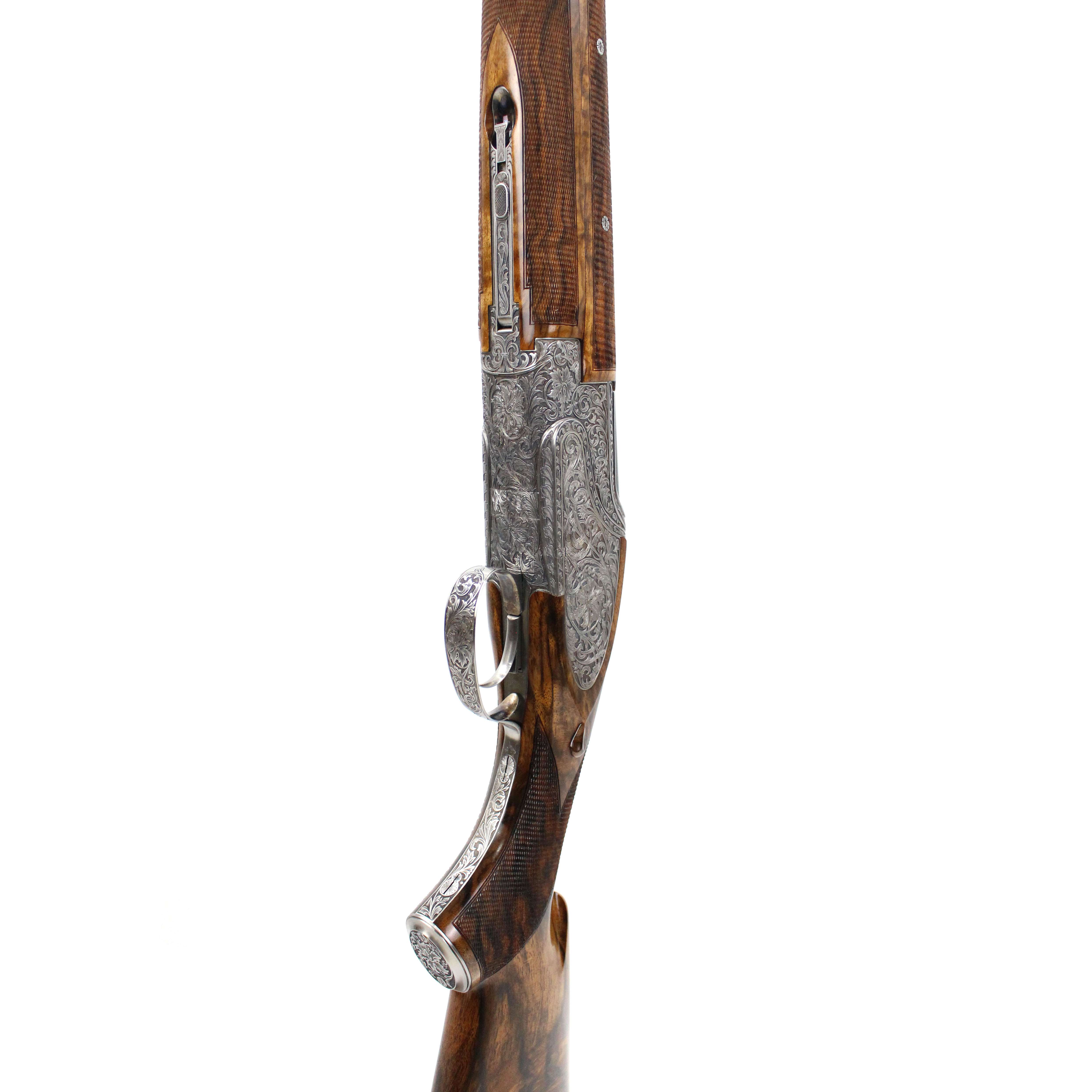
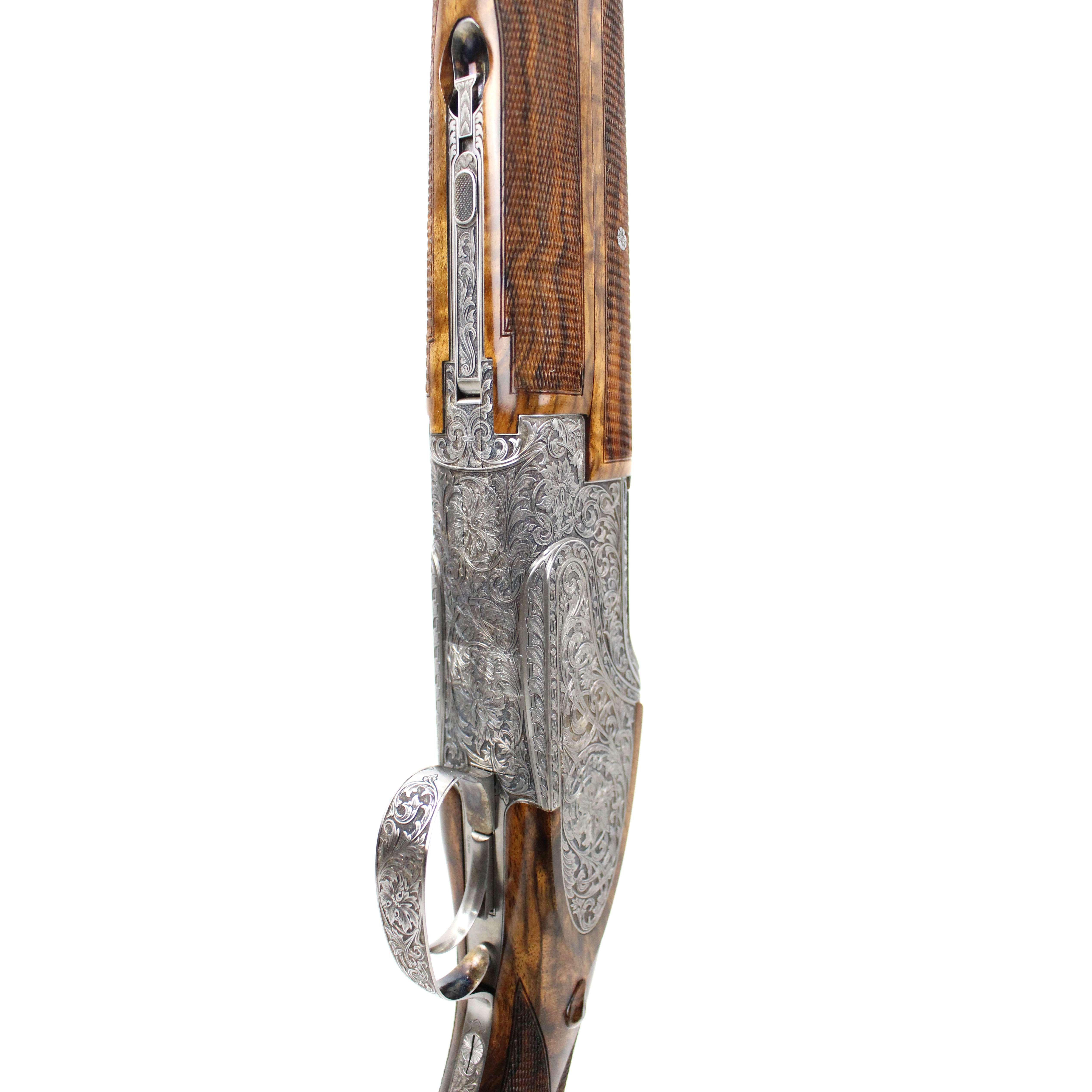
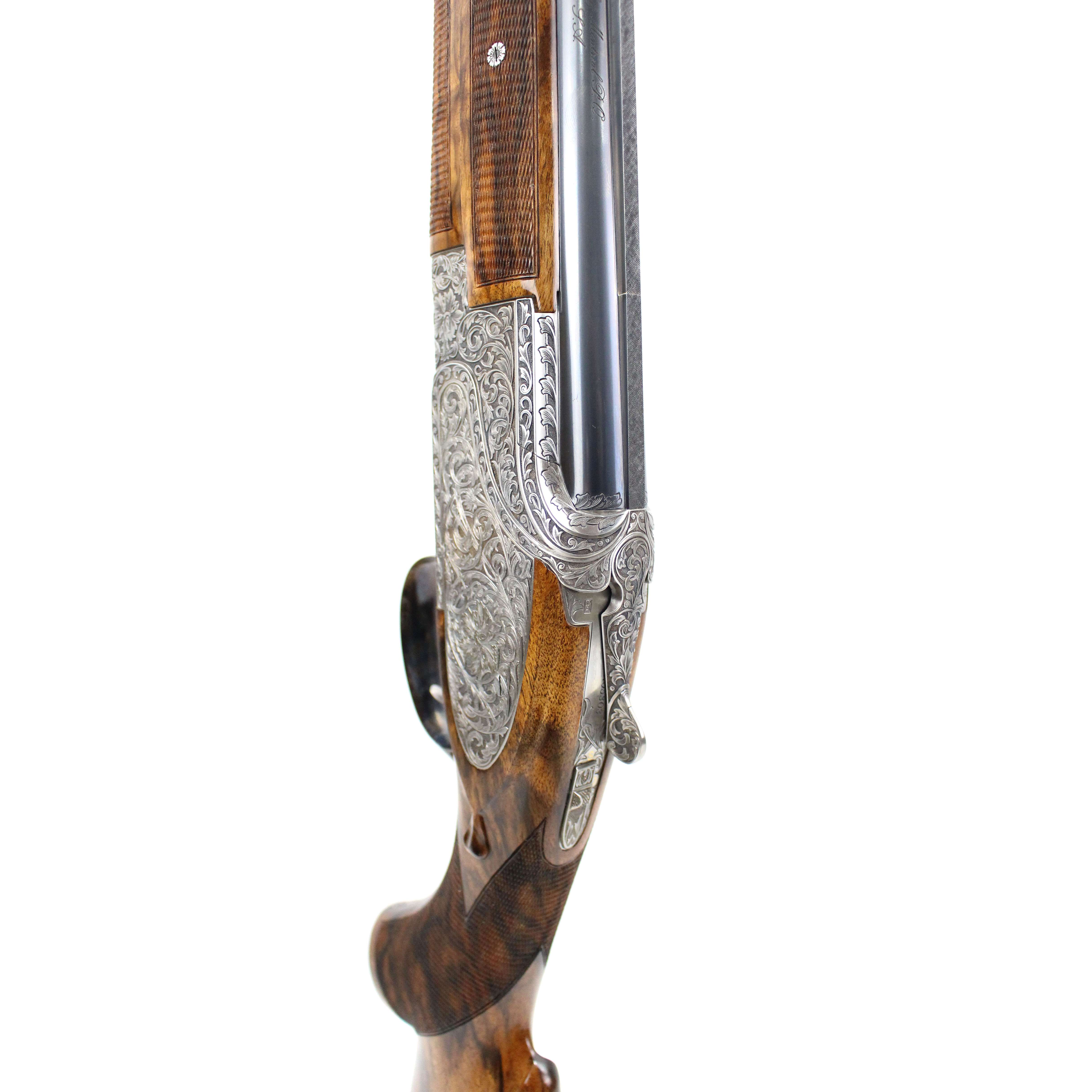
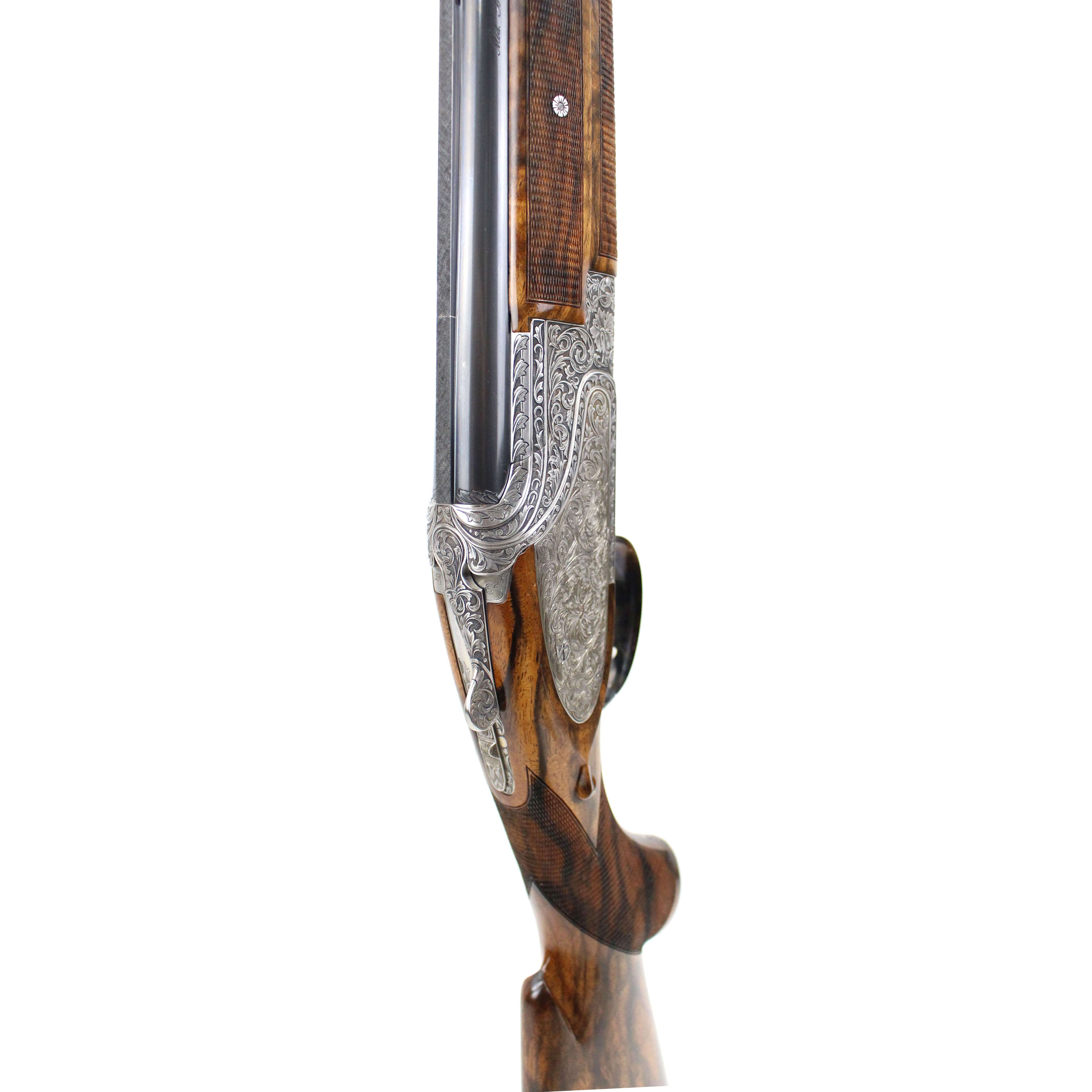
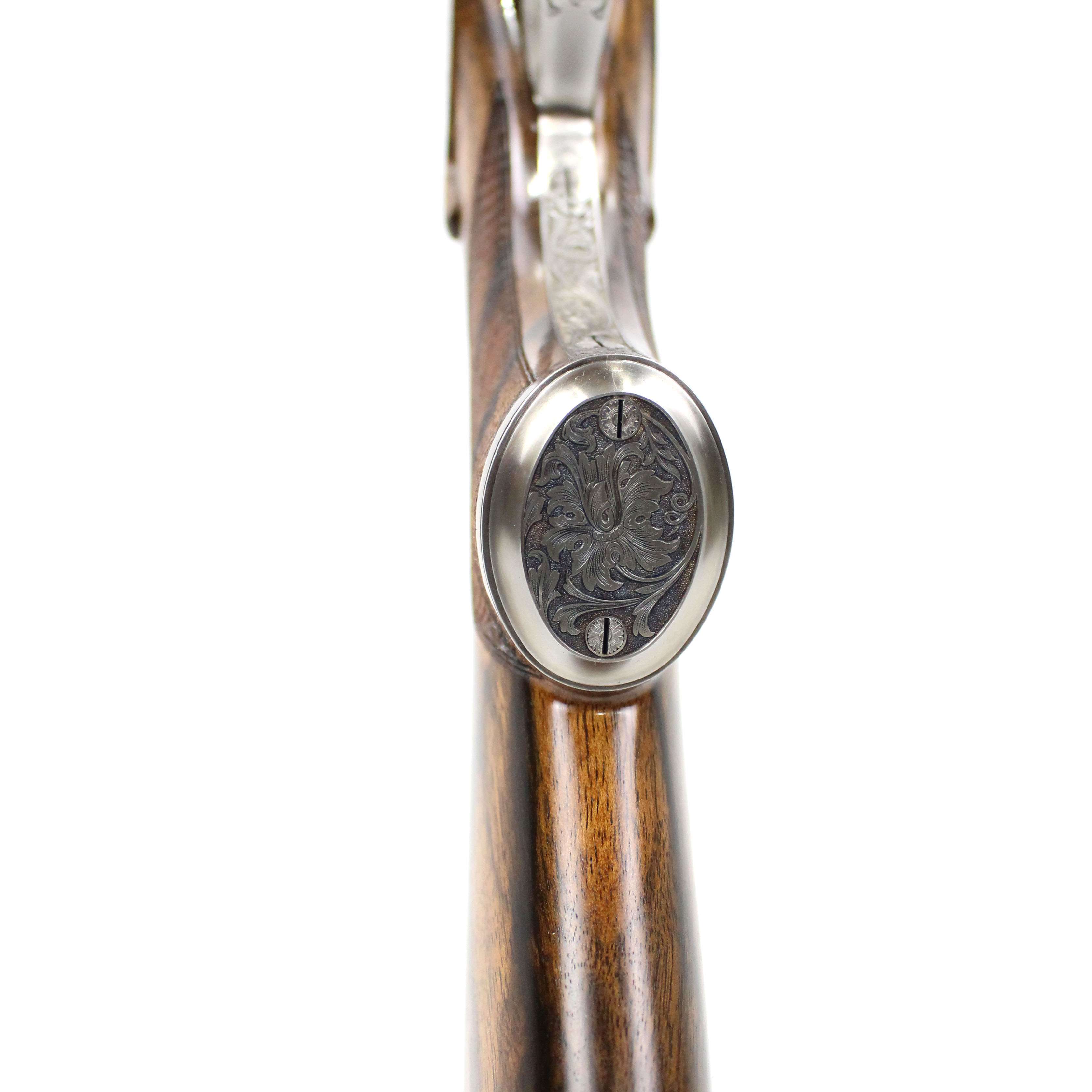
Browning Custom Shop B25 Renaissance SE 12GAx3″ 28″bbls
Browning |
B25 Renaissance SE |
12 Gauge |
Break Action |
Upland |
Right-Handed |
28" |
2 |
0911076 |
1 in stock
$89,999.99
1 in stock
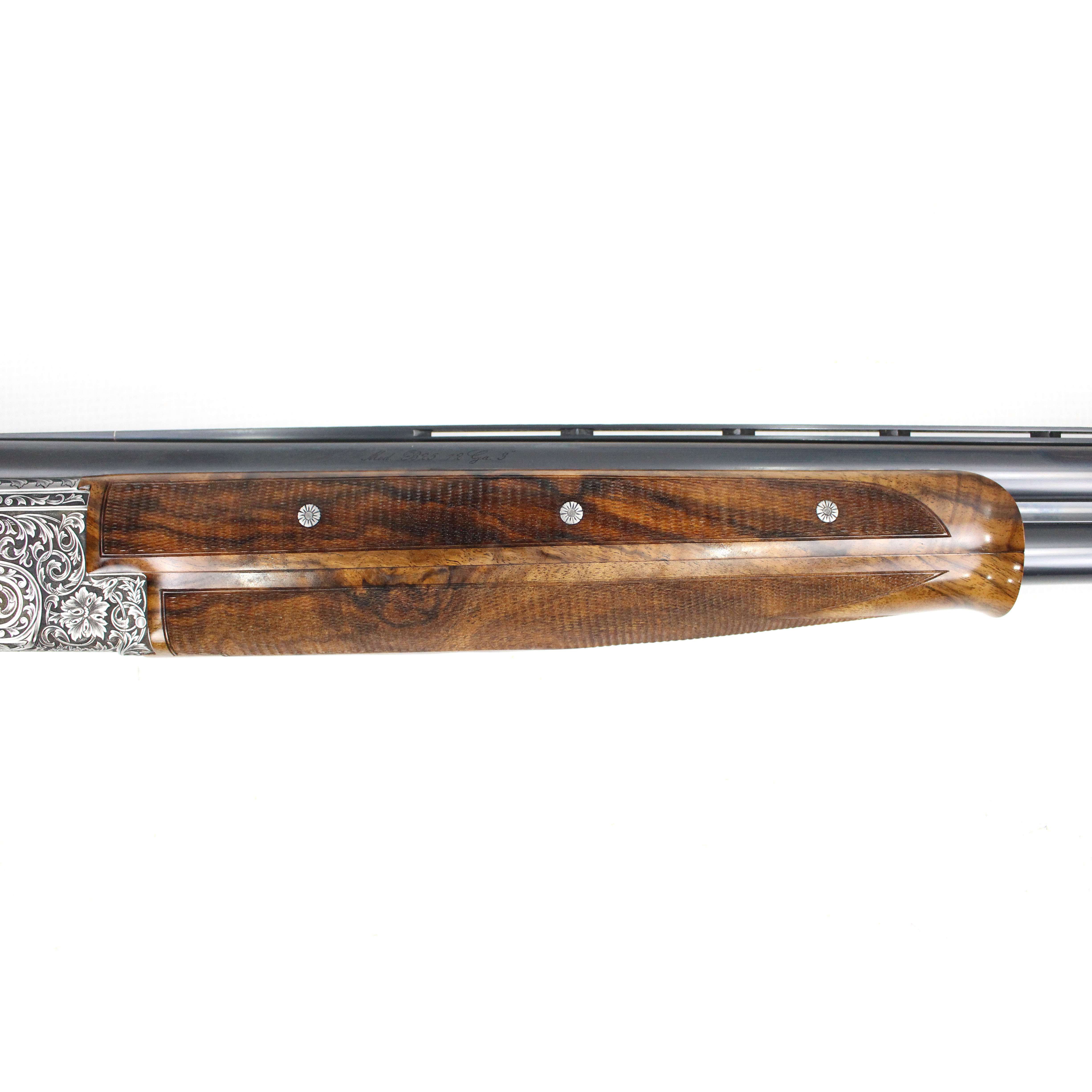
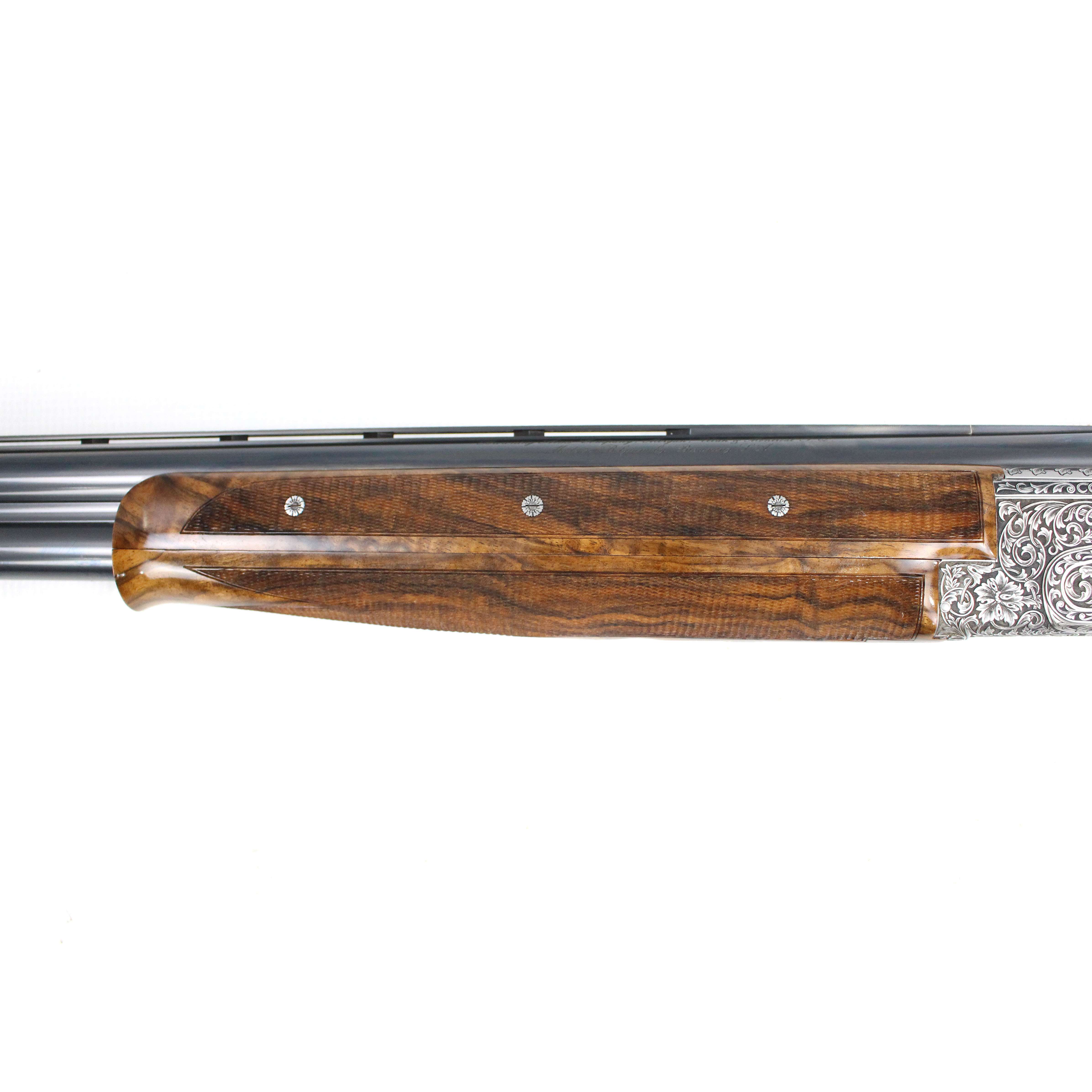
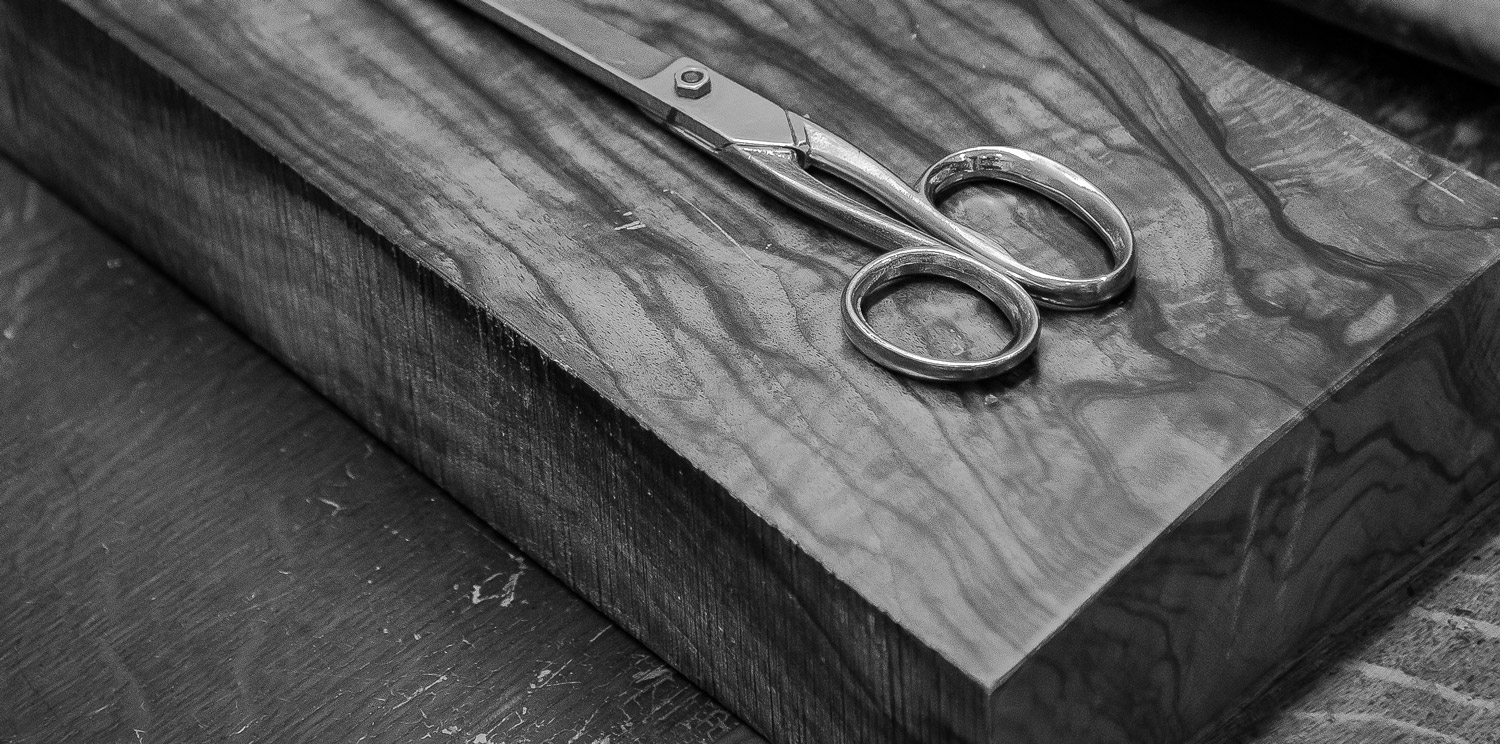
The walnut tree that is dedicated to the stock of a luxury firearm is not cut down but uprooted with hundreds of precautionary measures. The walnut blocks, simply squared, will become fine weapons stocks. Each block weighs about 3 kilograms of which there will be only 600 grams left after shaping. In the same wood and with the same care, the forehand will will be fitted up to the barrels and fore-end iron to match the stock.
ENSURING A PRECISE FIT BETWEEN THE WOOD AND THE STEEL SECTION
Disassembling the parts, he notes the points marked with red dye and thus refines the precision of the fitting. He then employs the same method to fit the fore-end and the trigger guard. The stocker uses tools that he has designed and made to his own specifications, for inletting the stock and the receiver, as well as the fore-end and at the fore-end stock.
ARRIVING AT THE FINAL FORM
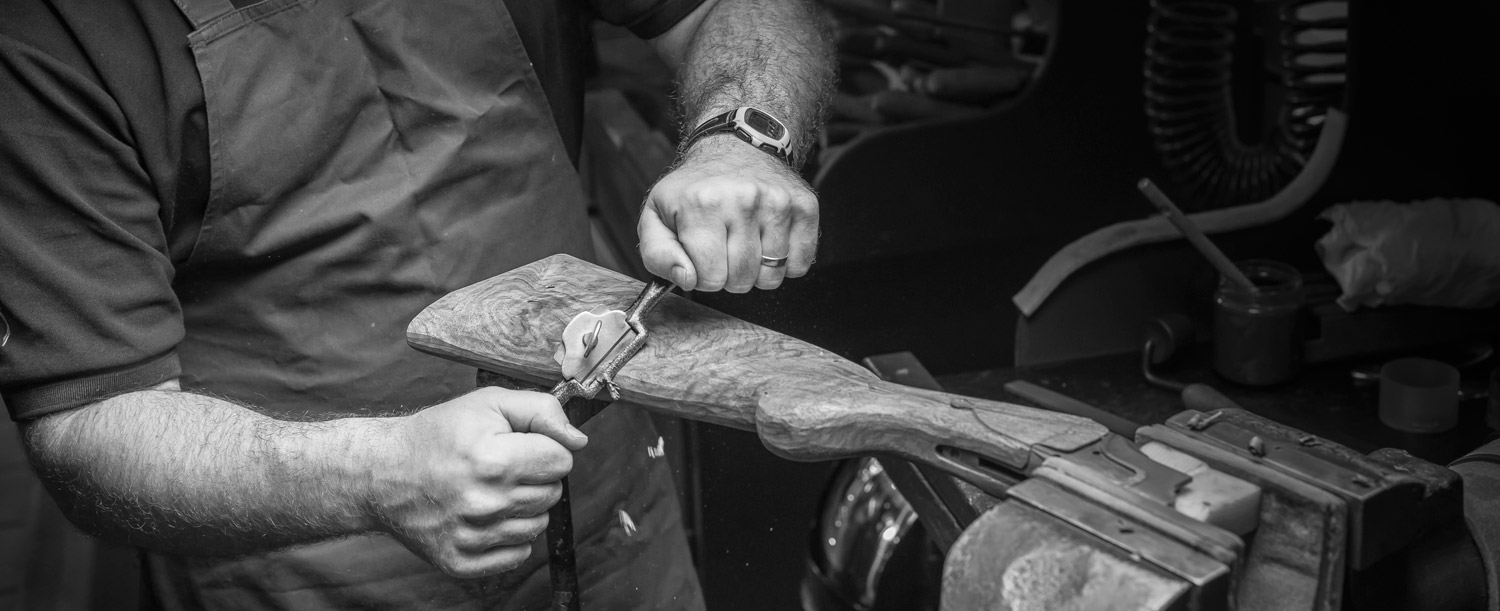
After fitting the woodwork, the stocker reshapes the stock and the fore-end to give the final form. He also corrects measurements to the wood edges, plate and handle. Then, patiently and meticulously, he repairs small wood defects with inlets. Now the wood will be subjected to a series of finishing processes. Successive stages of polishing and rubbing with grain filler are repeated until perfect.
Eventually the wood parts are waterproofed by linseed oil saturation.
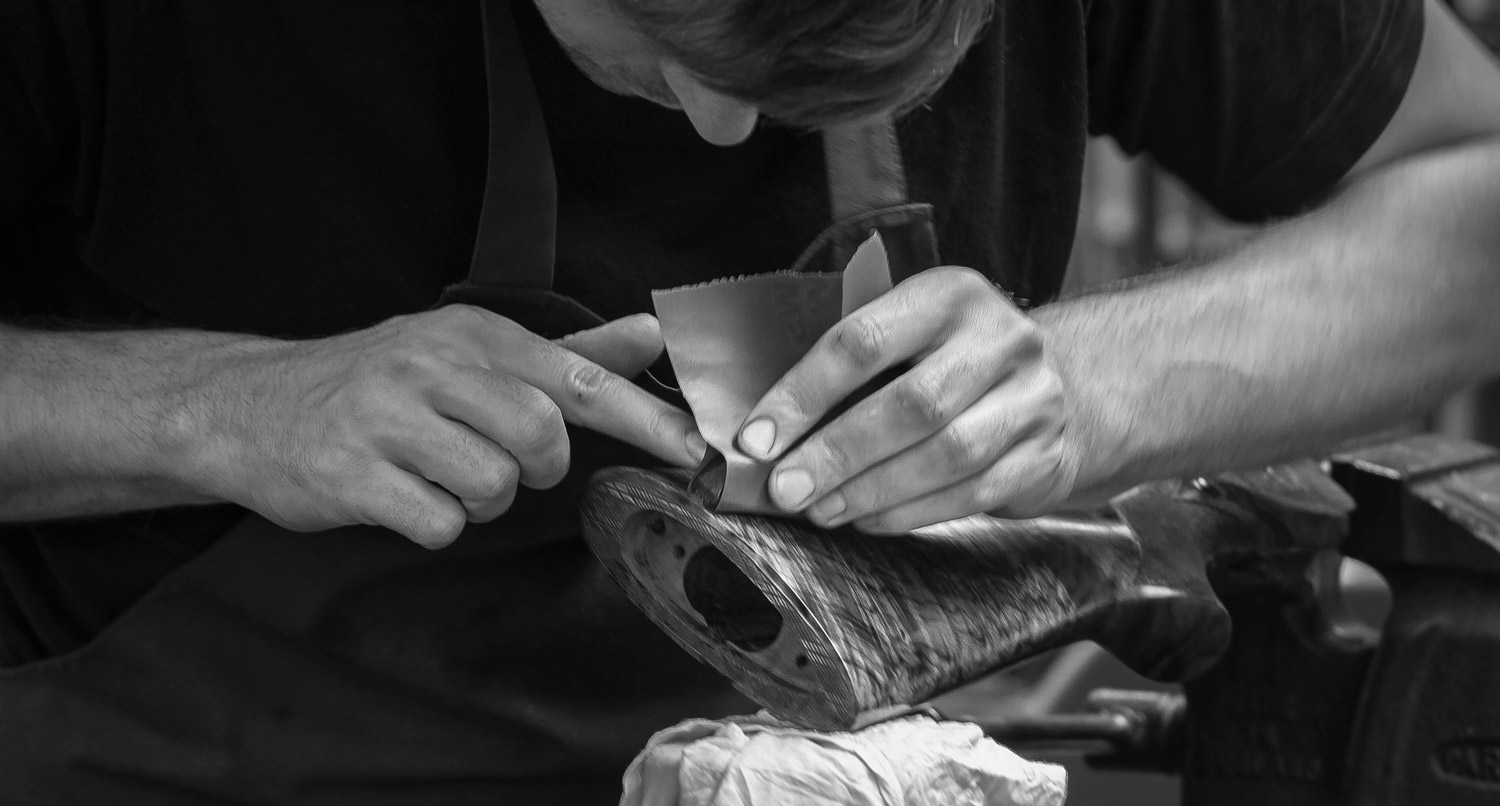
THE CHECKERING, ENSURES AN EXCELLENT GRIP
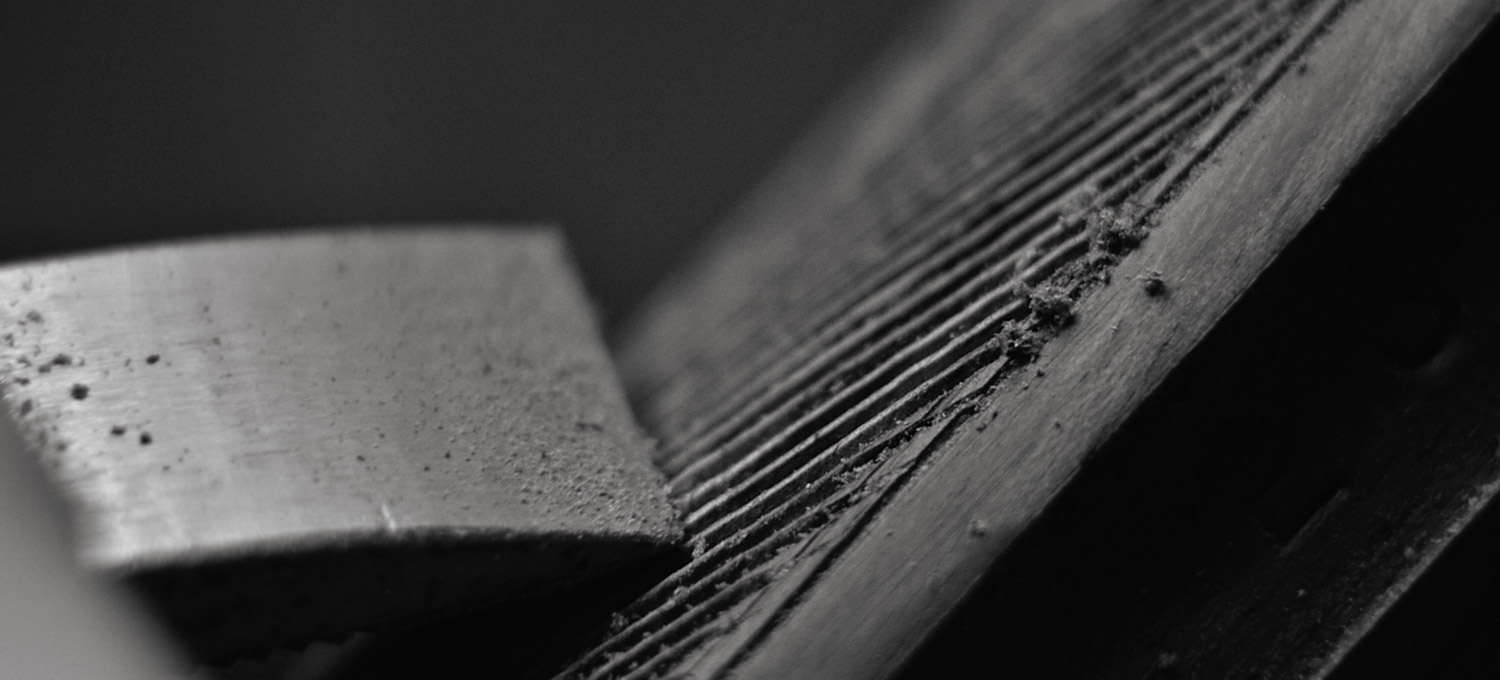
Receiver & Frame
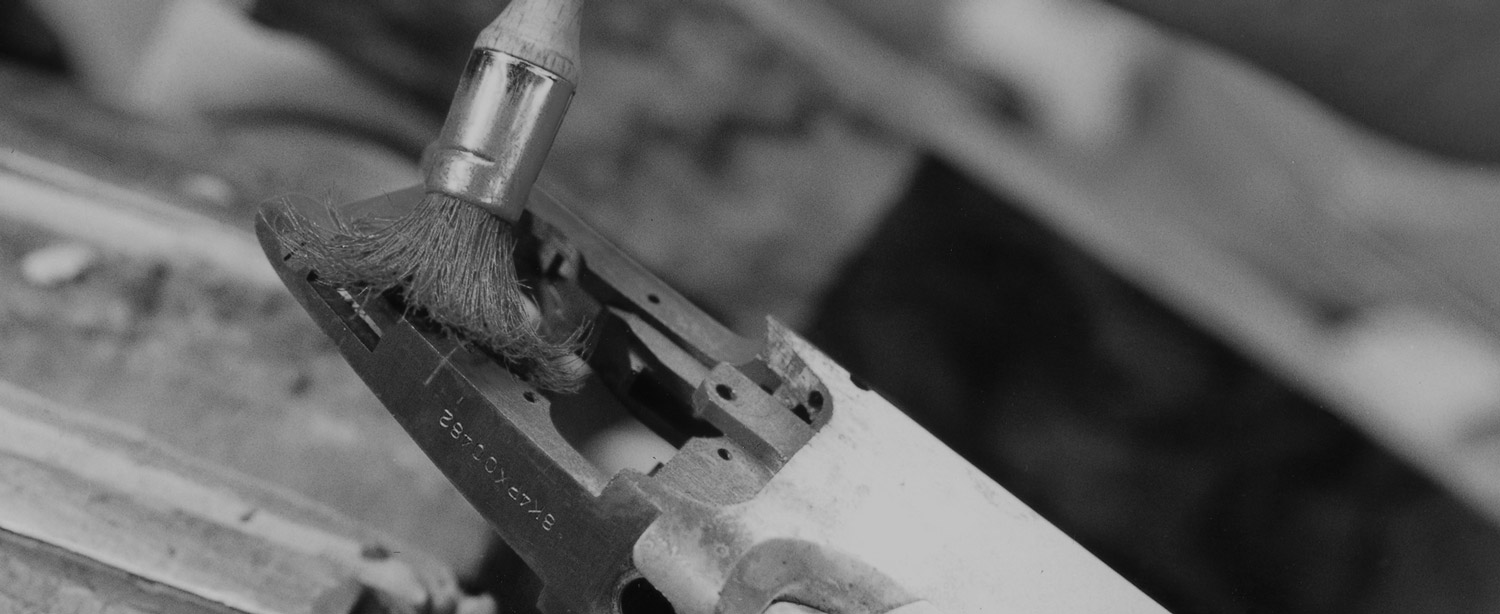
This starts with the dismantling of the percussion parts of the B25 for cleaning. Using a file, emery paper and a specially made chisel, the craftsman begins the task of the final refiling of the frame, fore-end iron and barrel head. The polishing of the parts that will be engraved is done manually with thin emery paper. This is extremely fine and exacting work, as the polishing must not alter the form created by the refiling.
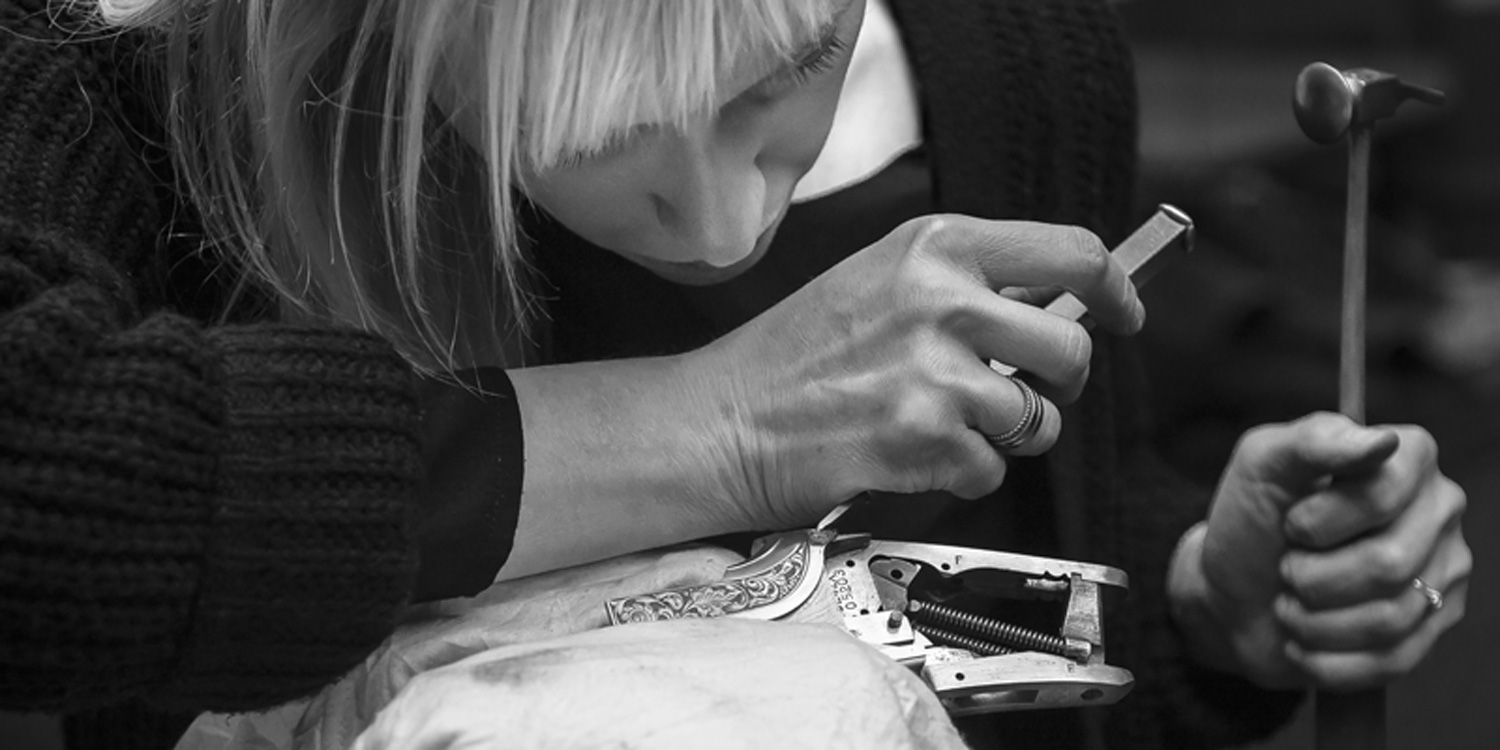
PERPETUATING THE LIÈGE ENGRAVING TRADITION
Today their heirs continue the engraving tradition of Liège with artistry, delicacy and patience.
The technique remains the same. With deftness of touch, the engraver outlines a rough sketch in fine lines on the polished steel using a dry point needle. Then, using handmade chisels and hammers, an elegant motif, scene or pattern emerges in exquisite, complex detail.Almost anything is possible, including the inlaying of precious metals like pure gold, green gold, yellow gold, silver or copper for a spectacular finish.
Each action frame of a John M Browning Collection is house marked to confirm its authenticity. The engraving is also signed by the artist who created it, and that confirms supreme talent, patiently applied.
A B25 begins life in the barrel workshop.
It starts with the choice of quality steel, which at this stage is in the form of solid bars that are successively hot-forged to increase their strength, then drilled and hammered at the choke. Traditionally, each pair of barrels consists of two barrels ‘demi bloc’, silver brazed together for outstanding durability. Tried and trusted, this technique is still regarded as the most reliable.
The side and top ribs are tin soldered and brazed to the barrels. At the boring bench the inside of the each barrel is polished using a rod partially covered with lead lap and emery dust. Then the barrel maker bores the chambers of the barrel and reams the choke.
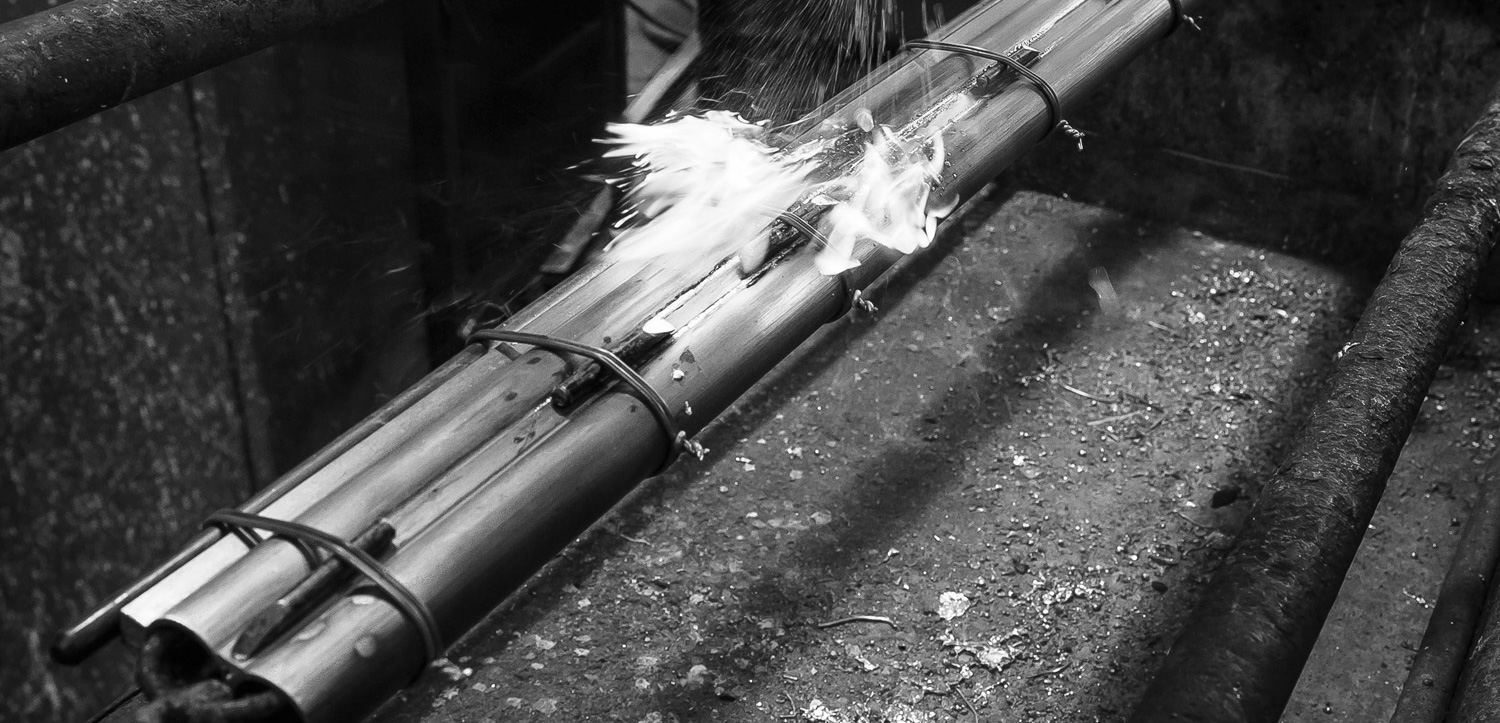
Striking off is the process that removes the braze residue along the top and tin from the side ribs, as well as any unevenness to the outer profile of the barrel left by machining. The ‘garnisseur’ smooths the barrels off, leaving a faultless ‘line’. This work is done entirely by hand, using planes specially designed by the craftsman himself.
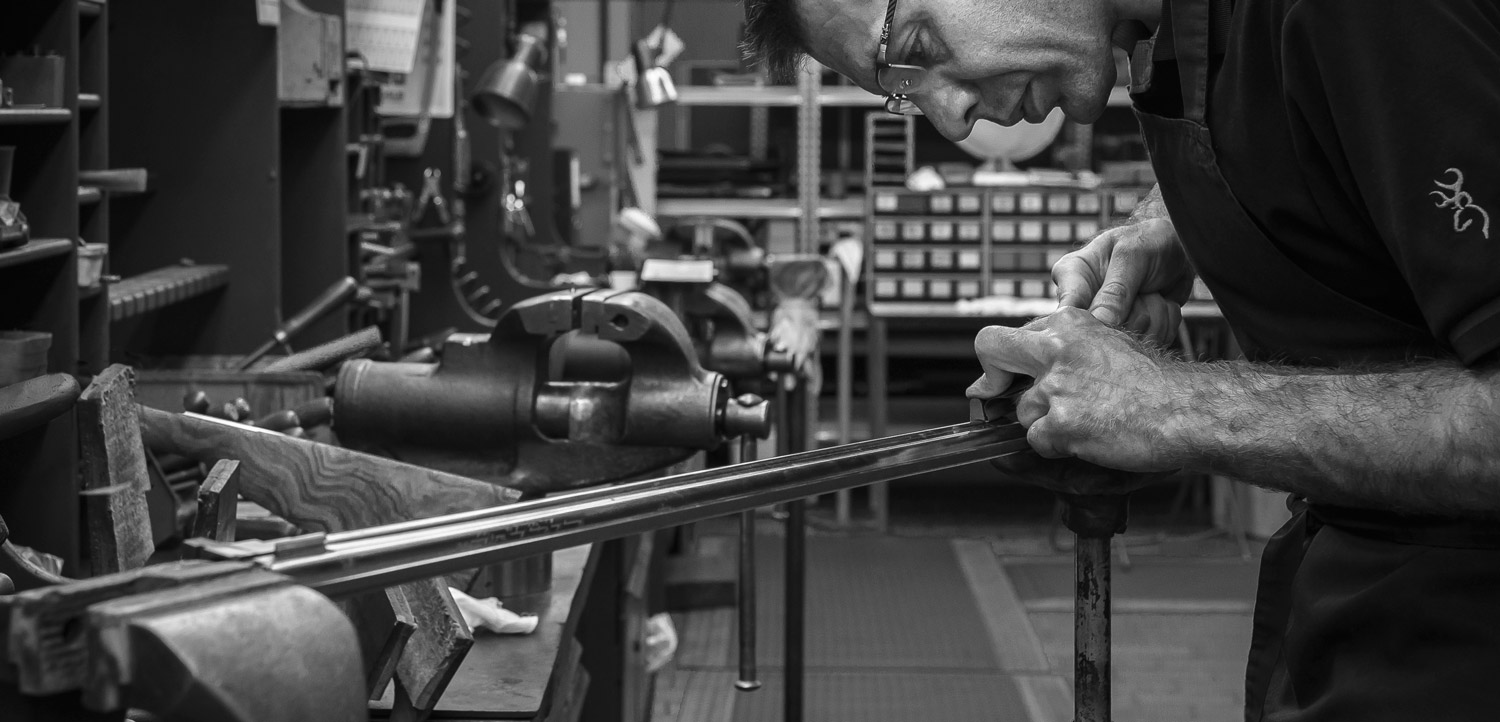
ASSEMBLING THE ACTION FRAME, BARRELS AND FOR-END IRON
To assemble these three principal elements the gunsmith uses the technique of lamp-blacking, an ingenious method that is both simple and efficient. This ancient process is still the only way to ‘see’ the fitting and timing of the parts inside the closed gun. The parts are covered in a fine layer of lampblack produced by the flame of an oil lamp. It is one thousandth of a millimeter thick.
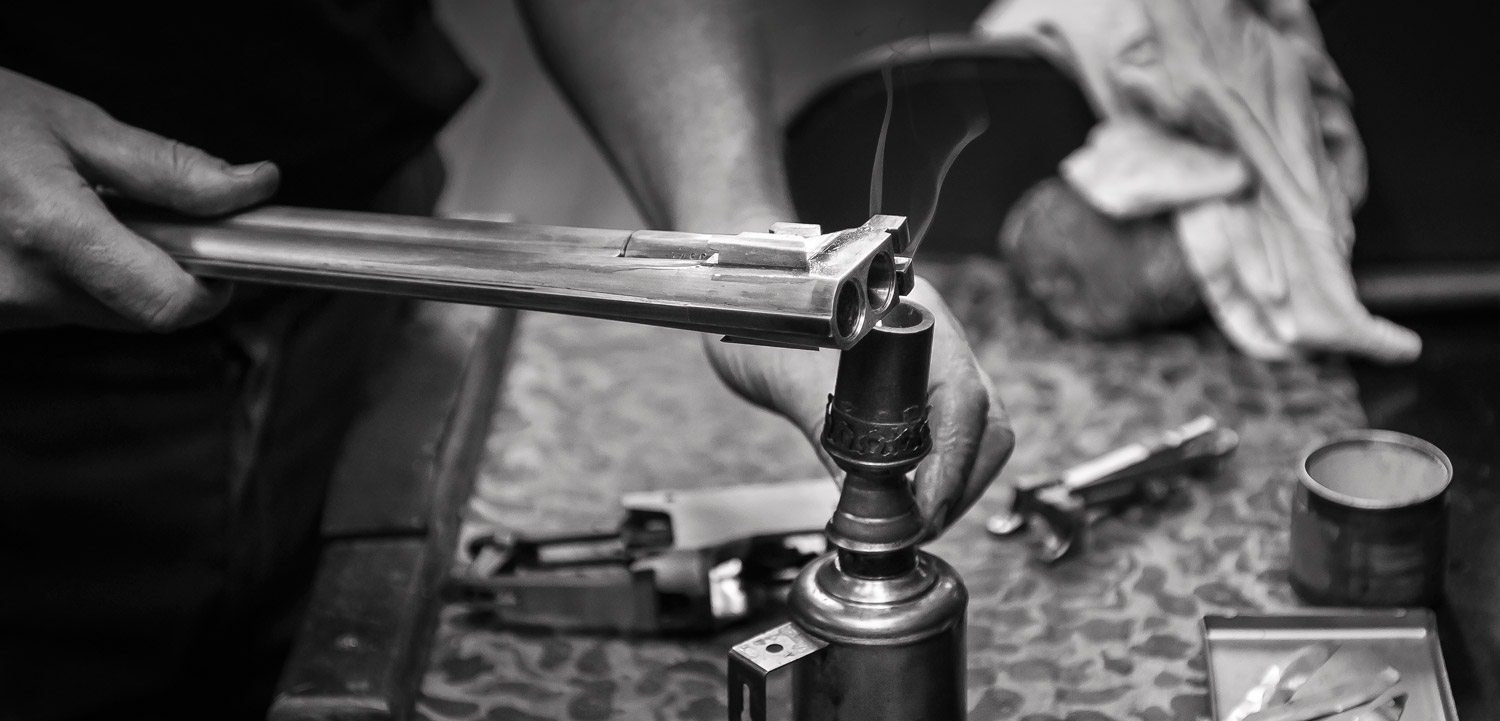
He then fits them firmly together before breaking them apart. If there has been any friction between the parts, the lampblack will have disappeared. Thus the gunsmith can check the precise fitting and timing of the parts and make any necessary modifications. He repeats the operation as many times as needed until the fitting is perfectly smooth and firm.
This is the secret of the characteristic sound you hear every time you open or close a Browning shotgun.
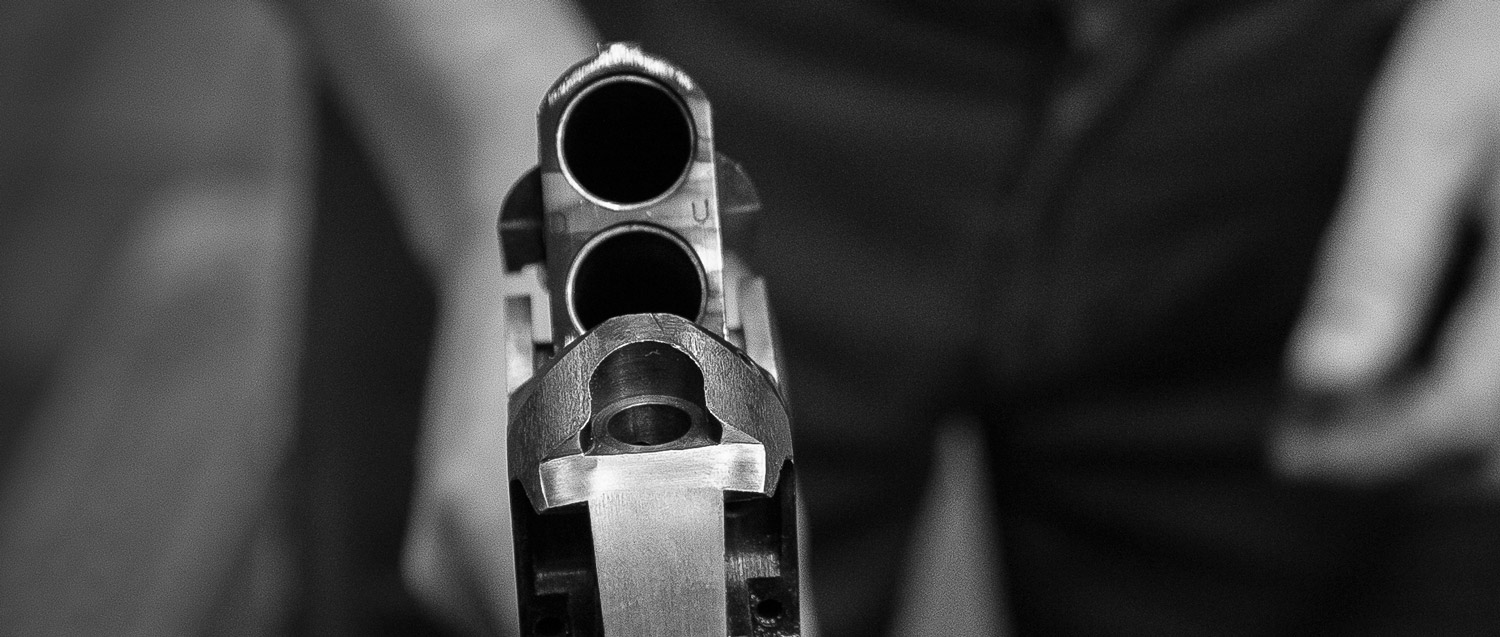
The finishing processes not only improve the aesthetics of the parts but, crucially, protects the gun against corrosion.
Polishing always precedes any type of surface treatments. The barrel undergoes a complete polishing using a felt buffering wheel and iron brushes. After that the barrels are ‘blued’ through oxidisation. This treatment requires at least six layers of ‘acid liquor’, between which the barrels are kept in a steam cabinet to ‘rust’ the surface of the metal. The parts are then brushed in order to remove the excess rust. This process of rusting and brushing is repeated until the barrels show the attractive black colour called ‘crowblack’.
| Gauge 12 | Chamber Length 3″ |
| Barrel Length 28″ | Overall Length 45 3/4″ |
| Length of Pull 14 1/4″ | Drop at Comb 1 5/8″ |
| Drop at Heel 2 1/2″ | Weight 7 lbs 6 oz |
| Wood Grade Grade V | Chokes Included Full, Improved Modified, Modified, Improved Cylinder, Cylinder |
| Dura Touch Finish No | Front Sight None |
| Choke System Invector-DS Flush | Barrel Material Steel |
| Receiver Material Steel | Trigger Guard Engraving Laser |